
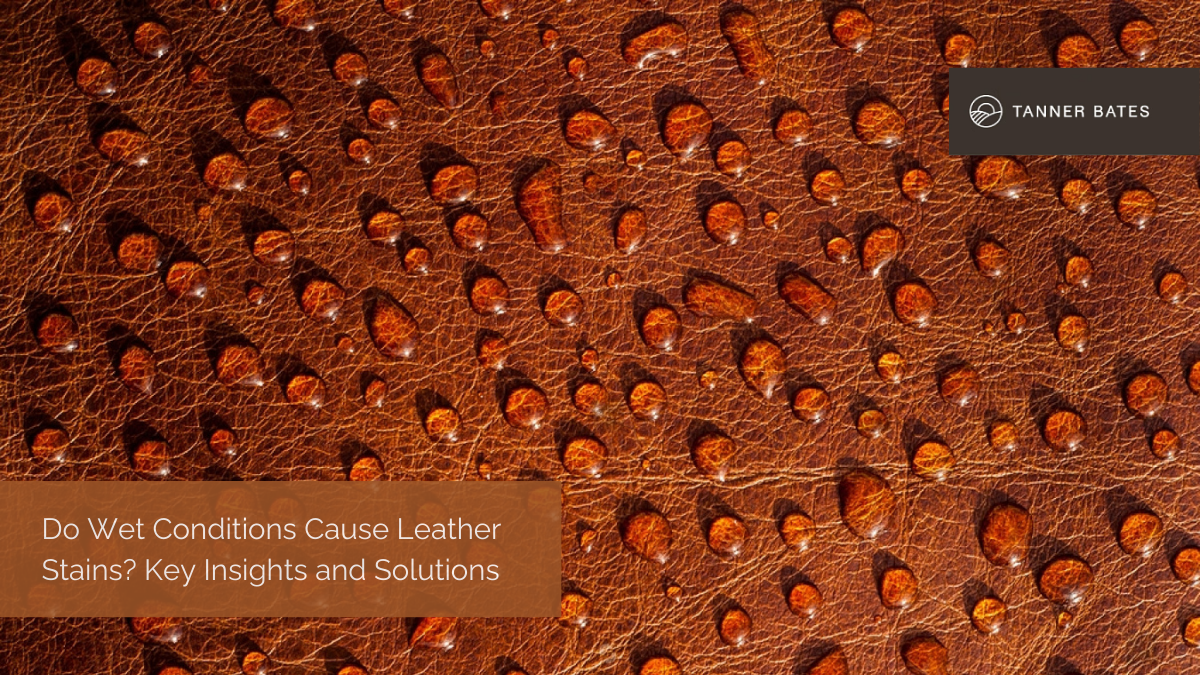

Leather is a timeless material cherished for its durability and natural beauty. However, when exposed to wet conditions, leather can become vulnerable to stains and damage. Understanding how moisture affects leather and knowing the best ways to protect it are crucial for maintaining its appearance and longevity.
Understanding Leather and Its Susceptibility to Stains
How Wet Conditions Cause Leather Stains
Common Types of Leather Stains
- Water Spots: These occur when water droplets sit on the leather's surface and dry, leaving behind mineral deposits that cause discolouration.
- Mould and Mildew: Prolonged exposure to moisture can lead to the growth of mould and mildew, which not only stains the leather but can also cause a musty smell.
- Salt Stains: Common in winter, salt stains are caused by exposure to de-icing salts. These can leave white marks on the leather, which are challenging to remove.

Preventing Leather Stains in Wet Conditions
- Keep Leather Dry: If at all possible, keep your leather goods dry. Avoid exposing them to any form of moisture - this is a big win in protecting your leather.
- Apply a Waterproof Product: Use a high-quality leather protector to create a barrier against moisture. This invisible shield is your first line of defence against unexpected spills and rain showers. We recommend Renapur, specifically their Wax/Balsam. Apply as per the manufacturer's instructions. Always choose a quality, natural product if possible, and test it in an inconspicuous area first, as it will likely change the colour of the leather slightly.
- Regular Conditioning: Depending on use, condition your leather goods every 3-4 months to maintain their natural oils and resilience. Well-conditioned leather is less likely to absorb water and stain-causing agents. Again, always choose a quality, natural product and test it in an inconspicuous area first, as it may slightly alter the colour.
- If Leather Gets Wet: Let the leather dry naturally - do not place it on or too close to direct heat sources. Once fully dry, apply a good quality, natural leather feed to replace any natural fats and oils lost during the drying process. Dehydration is the main cause of damage, so keeping the leather hydrated is key. Test the leather feed in an inconspicuous area first, as it will likely change the leather's colour slightly.
- Proper Storage: Keep leather items in a cool, dry place, away from direct sunlight and humidity. Proper storage prevents mould growth and colour fading, preserving your leather's natural beauty.
- Immediate Action for Wet Leather: If your leather gets wet, gently blot it with a soft, absorbent cloth. Quick action can prevent water from seeping deep into the leather and causing lasting damage.
- Avoid Heat: Never use direct heat sources, like hairdryers, to dry wet leather. This can cause further damage. Instead, let your leather air dry naturally at room temperature.
Effective Solutions for Removing Leather Stains
If your leather has already developed stains, there are steps you can take to restore its appearance. For water spots, gentle cleaning with a damp cloth followed by conditioning can often remove the marks.
Unfortunately, or fortunately, depending on how you look at it, when you purchase and use high-quality naturally vegetable-tanned leather, the leather will take on marks, especially from exposure to any form of moisture. On some leathers, these marks are more noticeable than others; however, this is all part of the charm of vegetable-tanned full-grain leather.
These marks are ultimately permanent and cannot be reversed.
However, with time and use, the marks will fade and go deeper into the leather as it takes on other new marks. This is all part of the patina developing. The colour of the leather will also likely deepen and darken, another permanent change.
If a mark is particularly obvious, it might be worth applying a little dose of a quality natural leather conditioner/feed, such as our Hide Food, to see if this disguises the mark a little. The application of a leather feed will make the leather slightly darker in colour.
The only other solution is to use your leather a lot! With time and use, the leather will take on additional marks and slowly deepen and darken in colour. The more you use it, the faster and better the patina gets. It is a slow process to build the patina, and the first marks are always a little painful, but soon the leather will transform completely, developing its unique patina, telling the story of its life and use - completely unique to you.
It is a journey. You have to earn your patina. Cherish the process and the memories along the way. The first mark is always the most painful.
Remember to keep your leather hydrated - an occasional application of Hide Food or another natural leather feed will help replenish any natural fats and oils lost over time. This will help keep the leather in good condition, disguise marks, and build the patina.Long-Term Care Tips for Leather
Frequently Asked Questions About Preventing and Managing Leather Stains
1. Can water permanently stain leather?
However, with time and use, the marks will fade and go deeper into the leather as it takes on new marks. This is part of the patina developing. The colour of the leather will also likely deepen and darken, another permanent change.
If a mark is particularly obvious, you might try applying a small amount of a quality natural leather conditioner/feed, such as our Hide Food, to see if it disguises the mark slightly. The application of leather feed will make the leather a little darker in colour. The only other solution is to use your leather a lot!
Over time, the leather will take on more marks and gradually deepen and darken in colour. The more you use it, the faster and better the patina develops. The first marks are always a little painful, but soon the leather will transform completely, developing a unique patina that tells the story of its life and use - completely unique to you.
It’s a journey, you have to earn your patina. Cherish the process and the memories along the way. The first mark is always the hardest.


