

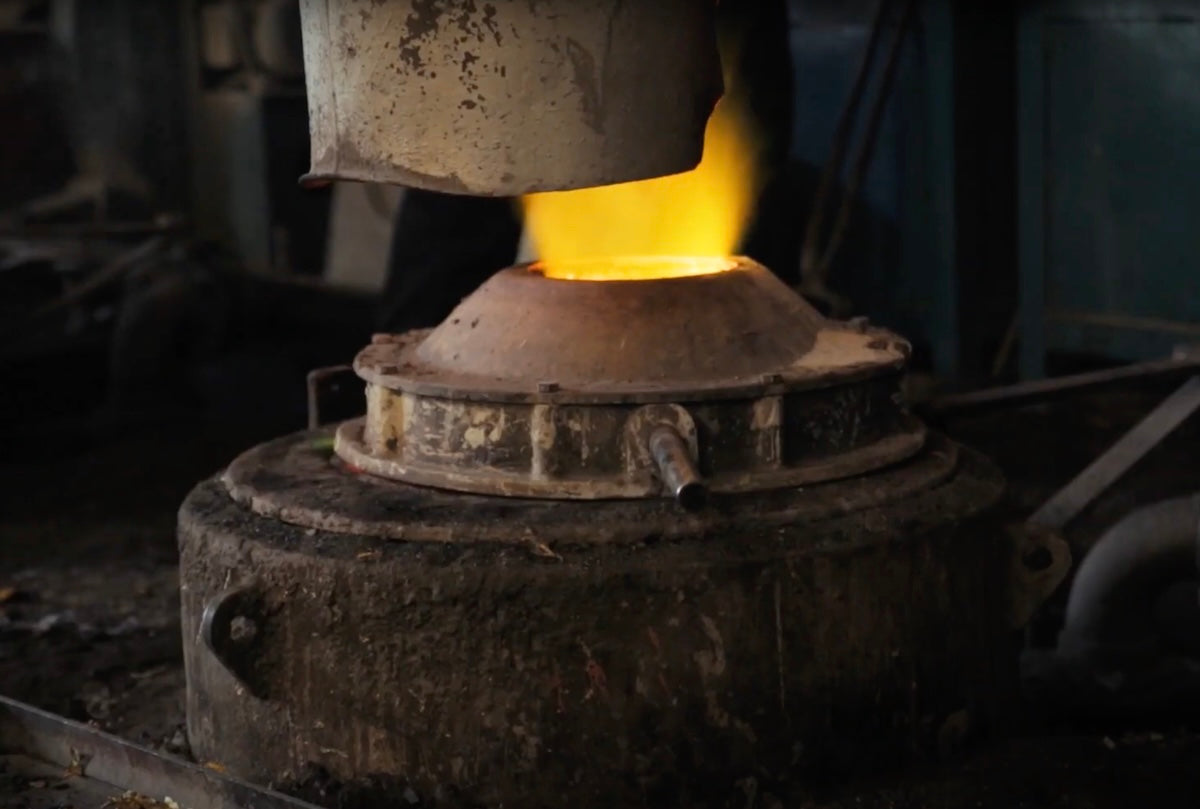
Sand Cast, Solid Brass Belt Buckles, Made in England
Have you ever wondered how our belt buckles are made?
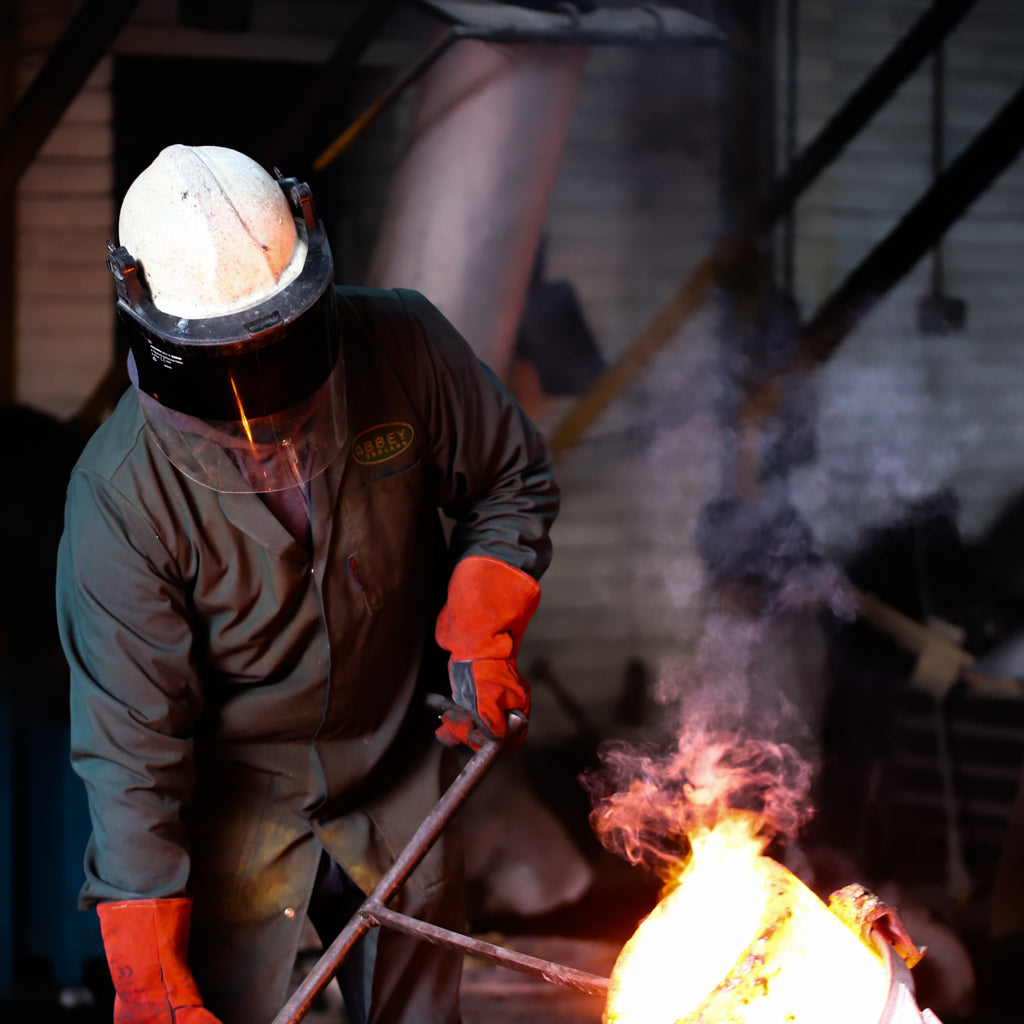
You probably already know that our buckles are sand cast in an 1832 West Midlands foundry, the old fashioned way, however we wanted to share with you a rare glimpse behind the scenes at the foundry and show you the process of sand casting and how our buckles are made.
Firstly, let us introduce Abbey England who have been manufacturing and supplying the finest quality buckles and other solid brass fittings to us since the very beginning. Abbey was founded in 1982, and continues to be a family run business. Rooted in the equestrian trade, Abbey is a champion of UK Manufacturing and source their raw materials from within the UK wherever possible. This aligns with and reflects our own values and ethos here at Tanner Bates. It is a privilege to work with likeminded family businesses, and play our part in supporting UK manufacturing.

The Abbey foundry is based in Walsall, and prides itself not only on sand casting the best quality buckles possible, but also offering impeccable service and famously supports small businesses such as our own, as well as working with large multinational companies dispatching their goods worldwide. Abbey proudly holds a Royal Warrant – a prestigious recognition of their unbeatable quality.
We source a plethora of items from Abbey, most of our buckles, fittings and hardware, however possibly the most recognisable is our West End Buckle which is a traditional and classic harness style buckle which we use on almost all of our bestselling oak bark leather belts.
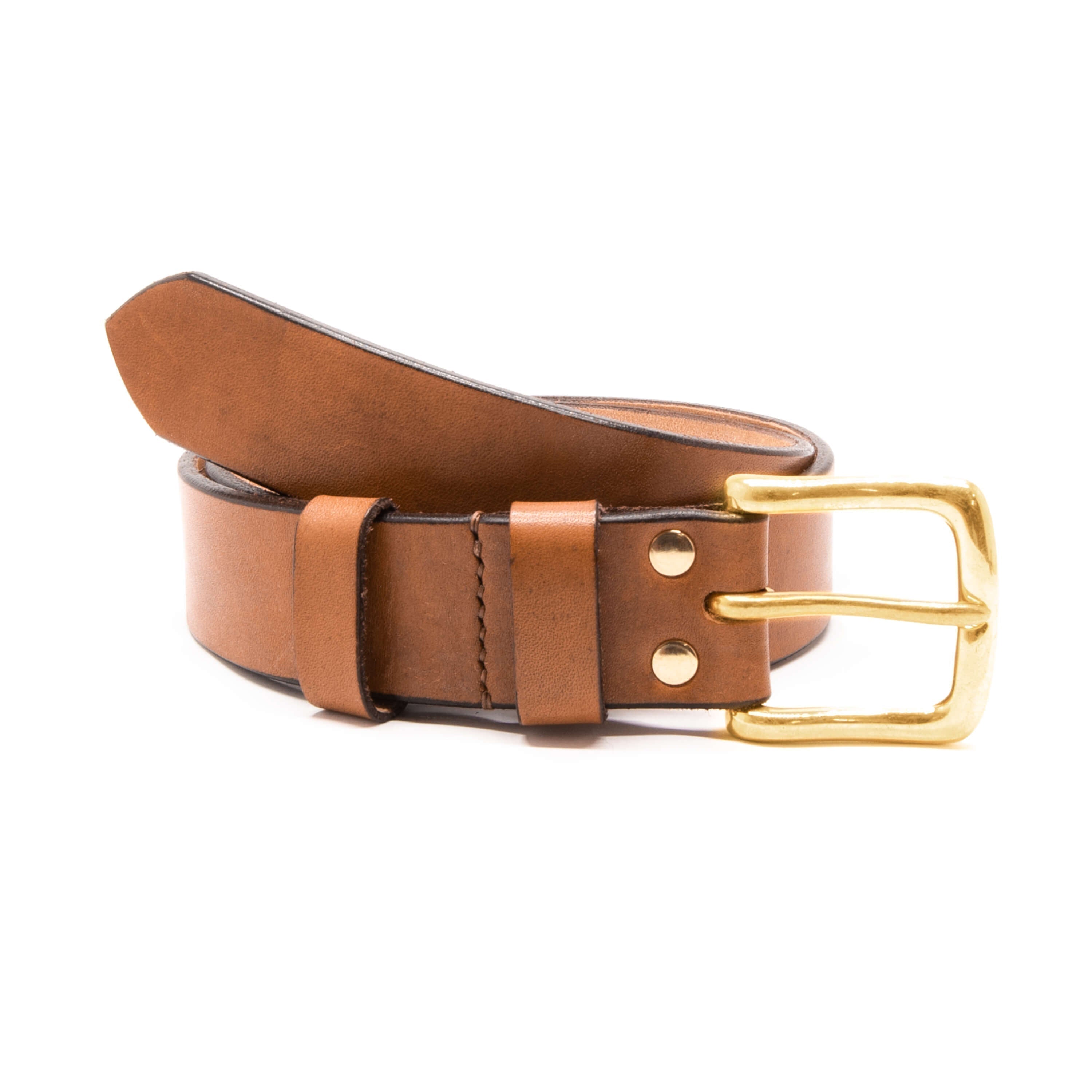
Let’s look at how this iconic buckle is produced.
The buckle is sand cast, using a greensand casting technique this is a specialist, labour intensive, traditional method of production which results in a buckle that will last a lifetime, if not more.
Firstly, the pattern for the buckle needs to be set into a box of sand.
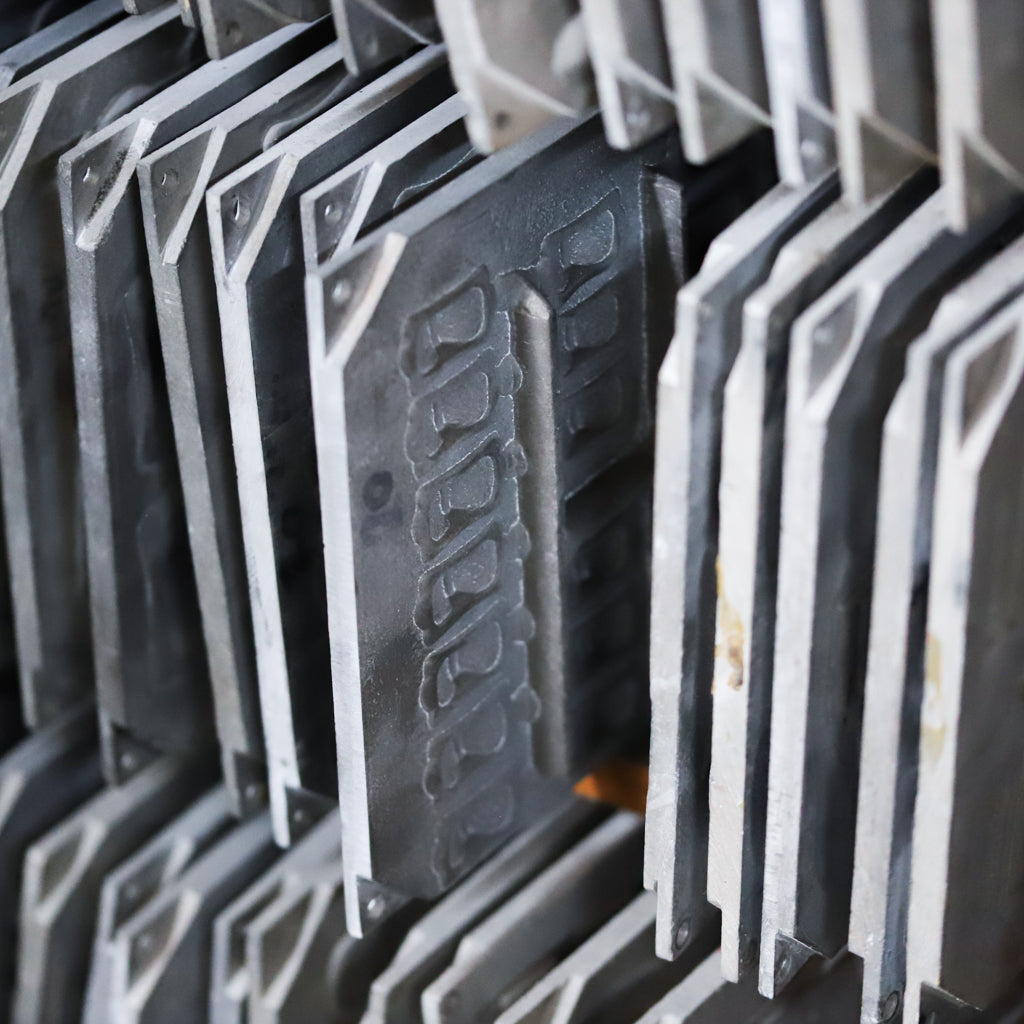
The box is constructed of two halves. Sand is shovelled by hand to fill both parts, which is then compacted tightly around the pattern, positioned in the middle to create a mould.

The pattern is then carefully removed and the two halves of the box are strapped securely back together.

A heavy crucible of molten brass, heated by an oil fired furnace, is then very carefully carried by two people across the foundry and delicately poured into the mould. This is an incredibly skilled art, honed through years of experience working in this hot environment - not for the faint hearted!
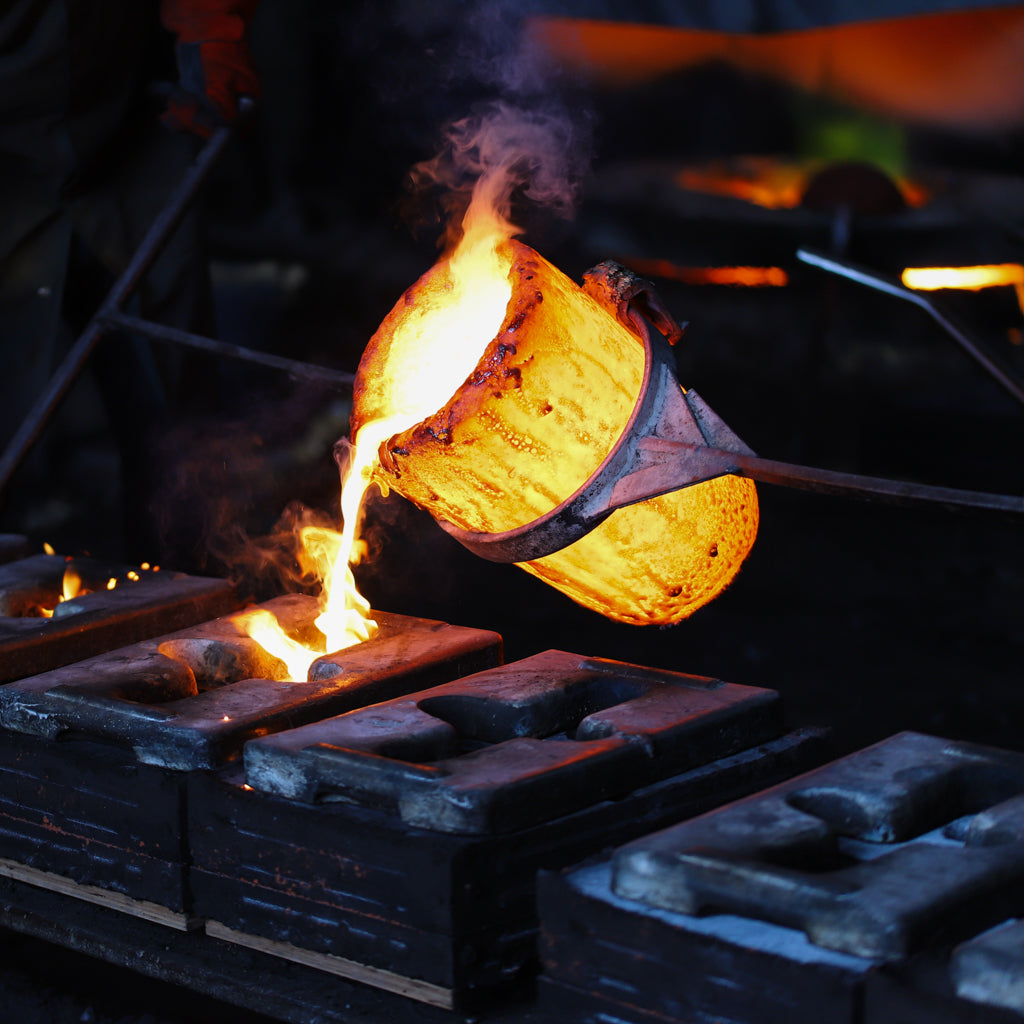
Once the box has cooled, it can be dismantled and the sand carefully knocked free to expose the freshly cast buckles. In this raw state, the buckles are rough and many more processes are required to finish the buckle.
The buckles are first separated, before their journey through the workshop can commence.
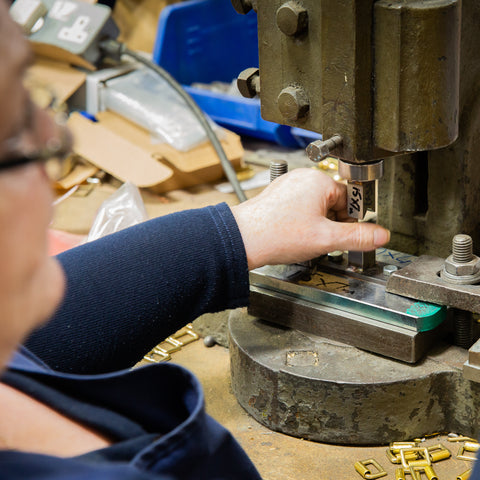
They will each individually need to be filed and sanded, before being barrelled and finally polished. Each process is time consuming and labour intensive, executed in small batches to the exacting Abbey standards by skilled team members.
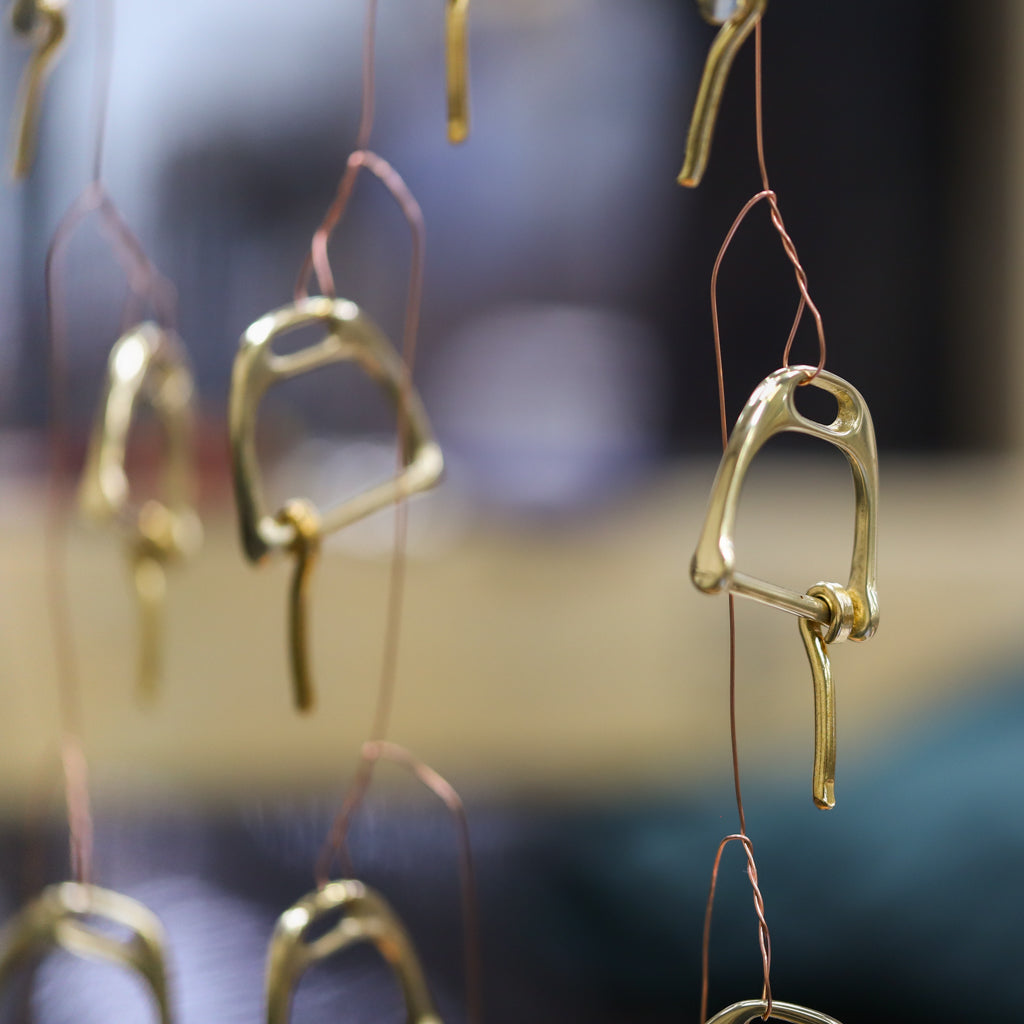
In this fantastic video, Andrew talks through the fascinating process of sand casting a buckle from start to finish:

