


Frequently asked questions:
Can you hand-stitch leather?
- Mark Stitching Line: First, mark a line where you want your stitches to be. This will serve as a guide to ensure your stitches are straight and evenly spaced.
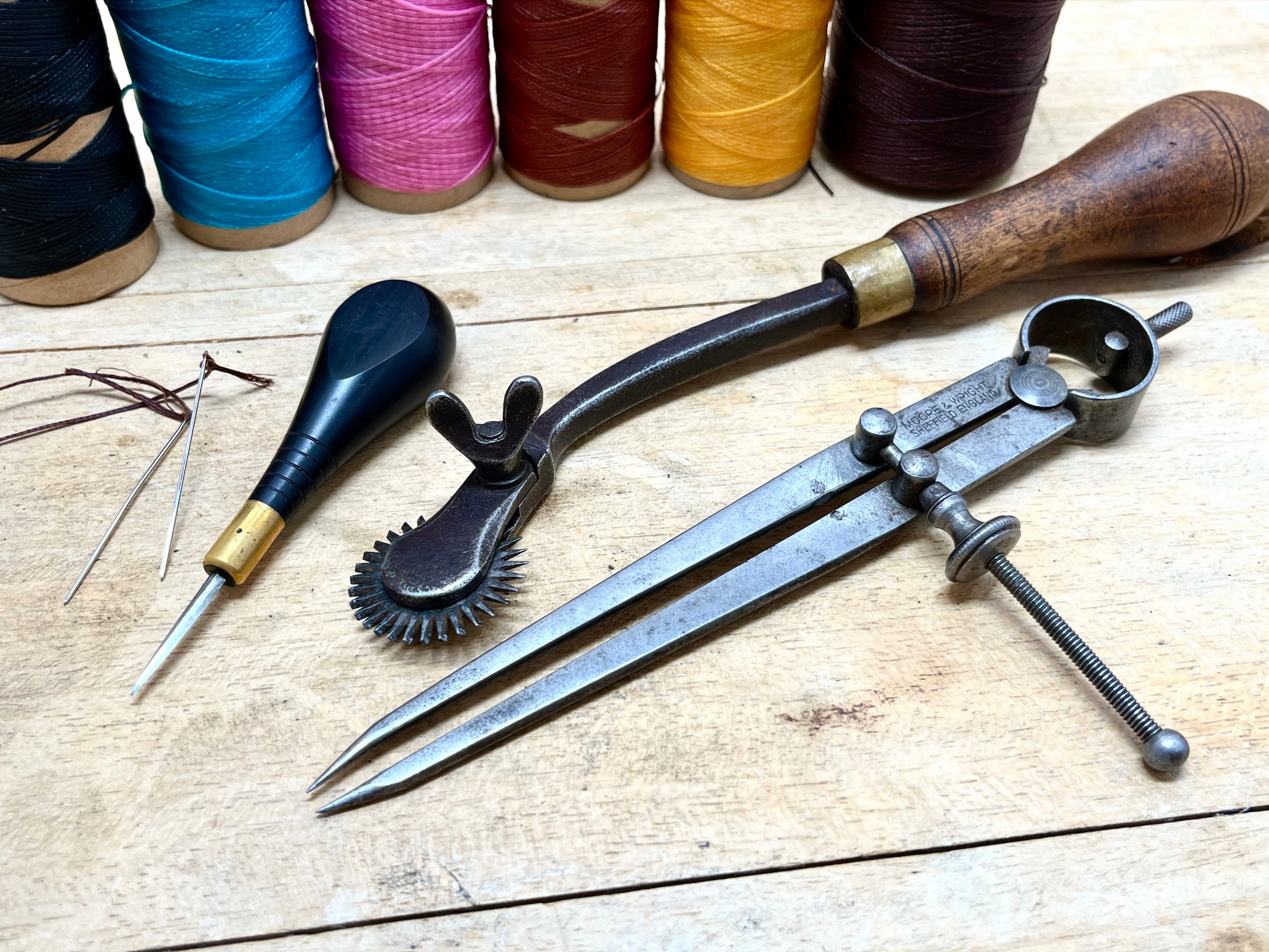
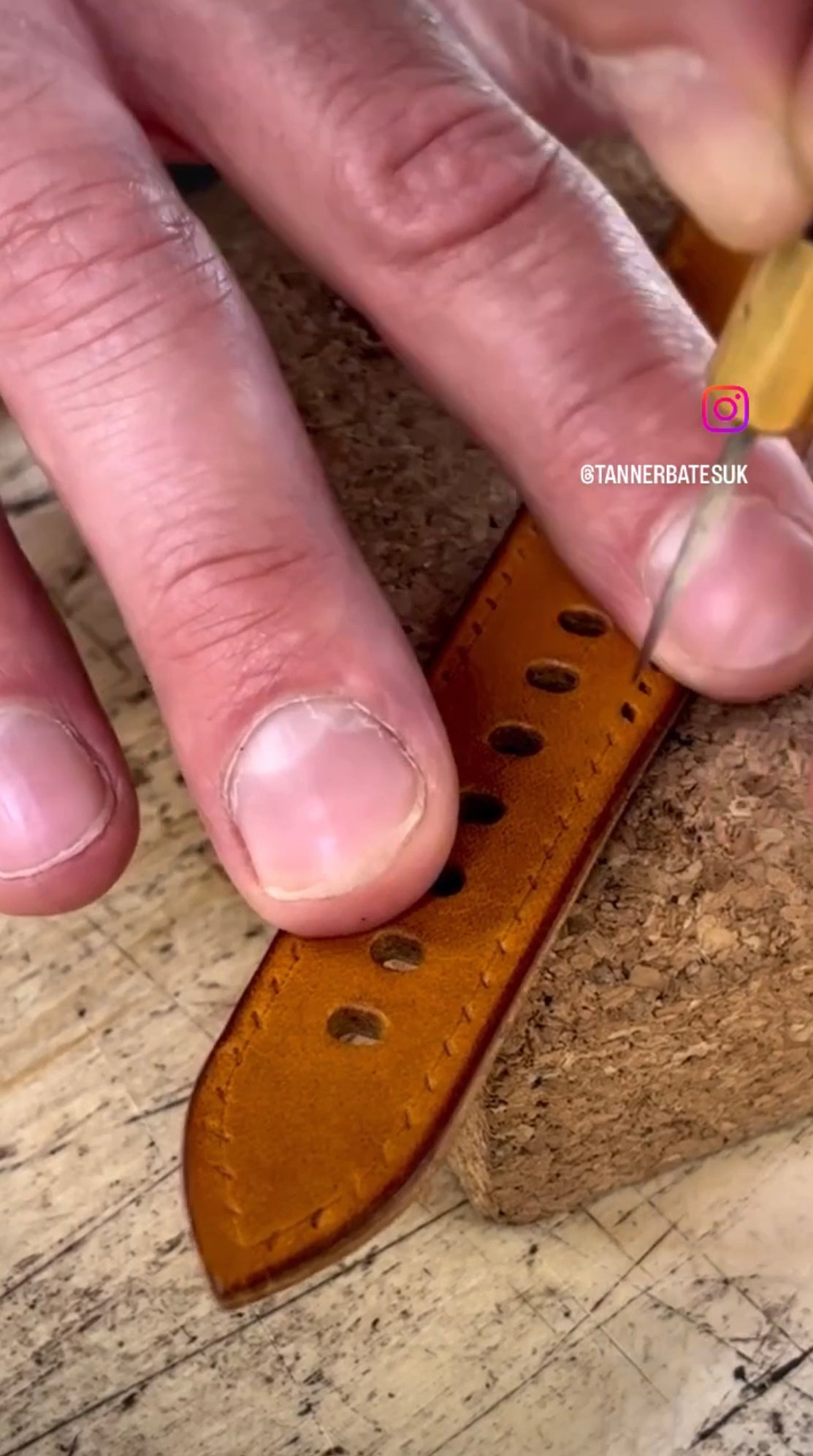
- Prick Stitching Holes: Use an awl or a set of pricking irons to make the holes for your stitches. Pricking irons are useful because they can make multiple evenly spaced holes at once, but an awl gives you more control over the placement of each hole.
- Thread Needle: Use a waxed thread for stitching. Waxed thread is more durable and easier to work with than unwaxed thread. You will use two needles, one at each end of your thread.
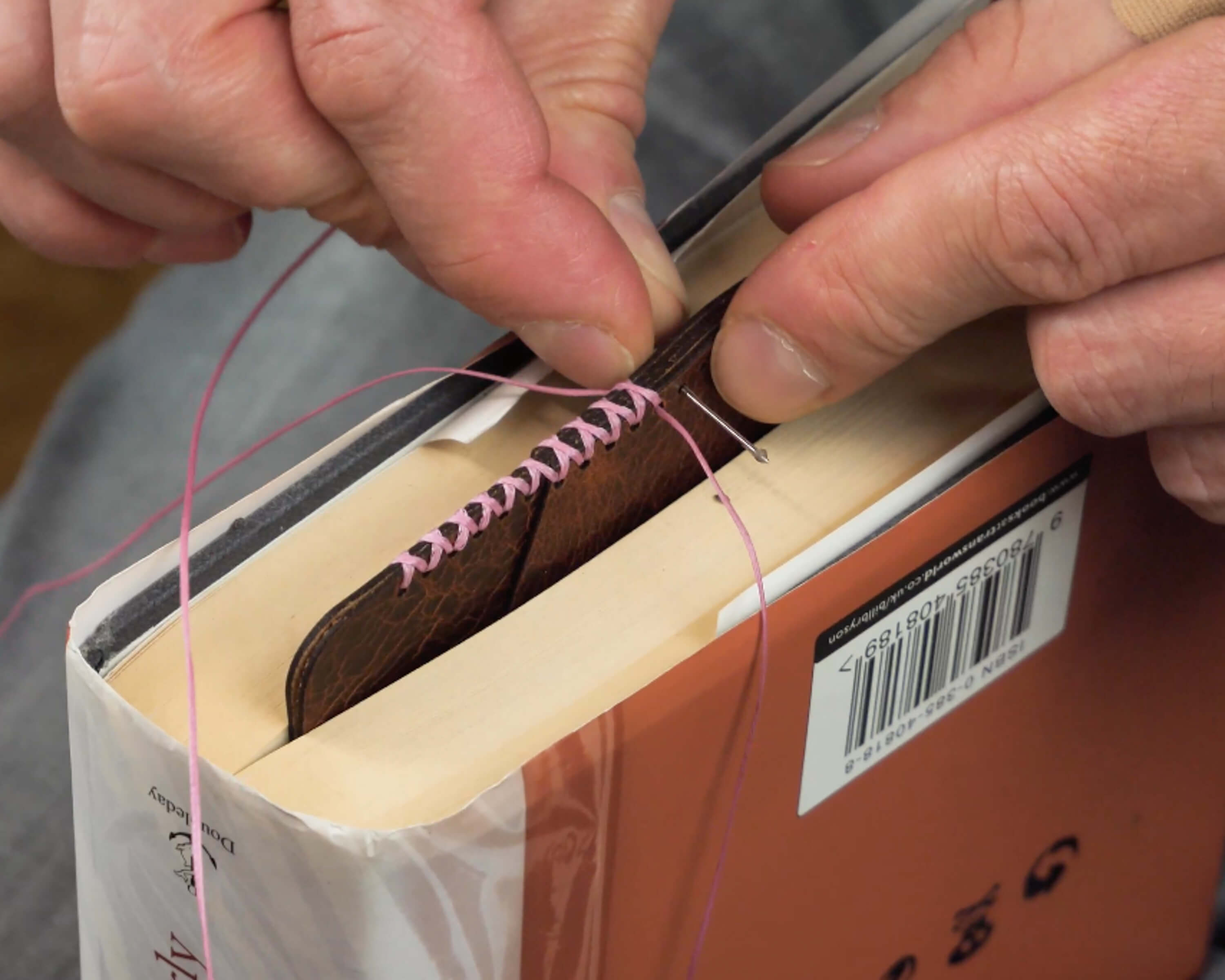
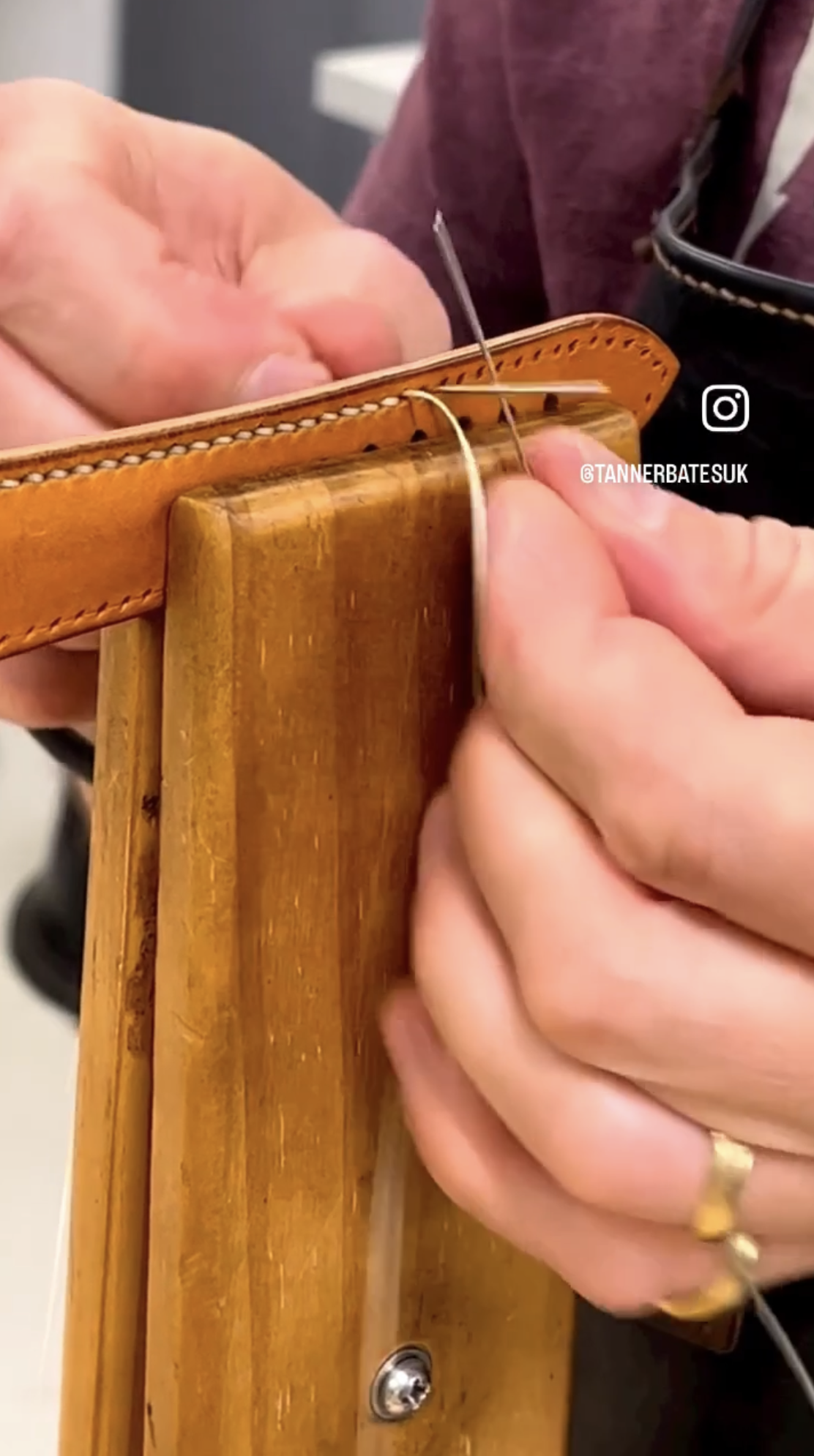
- Start Stitching: Start at one end of your stitching line and pass one needle through the first hole from the back to the front, then the other needle through the same hole from front to back. Continue this process along the entire stitching line.
- Backstitch: When you reach the end of your stitching line, backstitch a few stitches. This means reversing your stitching direction and going back over the last few stitches you made. This will lock your stitches in place and prevent them from coming undone.
- Trim Thread: Once you've backstitched, trim the thread close to the leather, and use a lighter to lightly singe the ends of the thread to prevent fraying.
What is the best hand stitch for leather?
Here's a basic guide to saddle stitching:
- Prepare your stitching holes with a pricking iron or an awl.
- You'll use a length of waxed thread with a needle at each end.
- Starting from the back of your first hole, thread one needle through to the front.
- Now take the other needle and thread it through the same hole, but in the opposite direction (front to back). Be careful not to pierce the thread that's already in the hole.
- Pull both ends of the thread until the stitch is tight.
- Repeat this process for each hole along your stitch line.
- Once you've reached the end, it's common to backstitch 2-3 holes to secure the stitching.
Is hand-stitched leather better?
- Durability: Saddle stitching creates a very durable seam because each stitch is independent. If one stitch were to break, the others would still hold. In contrast, machine stitching locks each stitch to the next, so if one breaks, others can unravel.
- Repairability: If a hand-stitched item does get damaged, it's generally easier to repair than a machine-stitched item. A skilled craftsperson can often re-stitch the damaged section without having to take apart the entire piece.
- Aesthetics: Many people appreciate the look of hand-stitching. It adds a level of detail and craftsmanship that can make the item more unique and valuable.
- Customisation: When stitching by hand, the craftsperson has complete control over every stitch. This allows for more customisation in terms of stitch length, thread thickness, thread colour, and more.
Do you need a special needle to sew leather by hand?
- Strength: Leather needles are made to be stronger than regular sewing needles, as they need to be able to penetrate the tough material without bending or breaking.
- Point: Leather needles typically have a chisel point or diamond point (rather than a rounded point like most sewing needles) which helps them to cut through the leather.
- Eye Size: Leather needles often have larger eyes to accommodate thicker, waxed thread typically used in leatherworking.
Can you hand-sew leather, and why is it preferred over machine stitching?
Absolutely! Hand-sewing leather is a time-honoured craft that produces stronger and more durable seams than machine stitching. The saddle stitching technique is particularly valued because, unlike a machine stitch that can unravel if broken, a saddle stitch remains intact, making it ideal for long-lasting leather products. Whether you’re working on leather belts, wallets, or bags, hand-stitching adds a level of craftsmanship that machines simply can’t replicate.
What’s the best type of stitch for leatherworking?
The saddle stitching technique is widely considered the best stitch for leatherwork. This method involves using two stitching needles, each attached to one end of the thread, to create an interlocking stitch that holds up even if part of the thread wears down. This technique is perfect for crafting high-quality handmade leather products that stand the test of time.
Do I need a special needle to hand-sew leather?
Yes! A leather sewing needle is specifically designed for working with thicker materials. Unlike regular sewing needles, leather needles have a sharp, chisel-like tip that allows them to pierce through dense leather without tearing the material. Using the right stitching needle ensures clean, precise stitches and makes it easier to stitch tight for maximum durability.
How do I get started with hand-stitching leather?
If you’re new to hand-sewing leather, start with a small project like a cardholder or black leather belt. Here’s a simple process to follow:
1. Mark your stitch line:
Use a ruler and a stitching wheel to create evenly spaced holes.
2. Punch the holes:
Use an awl or pricking iron to create stitching holes for your leather sewing needle.
3. Thread the needles:
Use a strong waxed thread with two stitching needles for saddle stitching.
4. Begin stitching:
Pass each needle through the same hole from opposite directions, ensuring a stitch tight enough to hold the leather securely.
5. Secure the ends:
Backstitch the final few stitches and melt the thread ends to prevent fraying.
With practice, you’ll gain experience in leather crafts and be able to create your own collection of beautiful leather products.
Why do hand-stitched leather goods last longer?
Hand-stitched leather goods are designed to last because they use superior leather working techniques. Unlike machine stitches, which rely on a looping mechanism, the saddle stitching technique locks each stitch independently. This means that even if one stitch breaks, the rest of the seam remains strong. The result is high-quality leather products that can be passed down for generations.
What types of leather products benefit most from hand-stitching?
Hand-stitching is ideal for many handmade leather products, including:
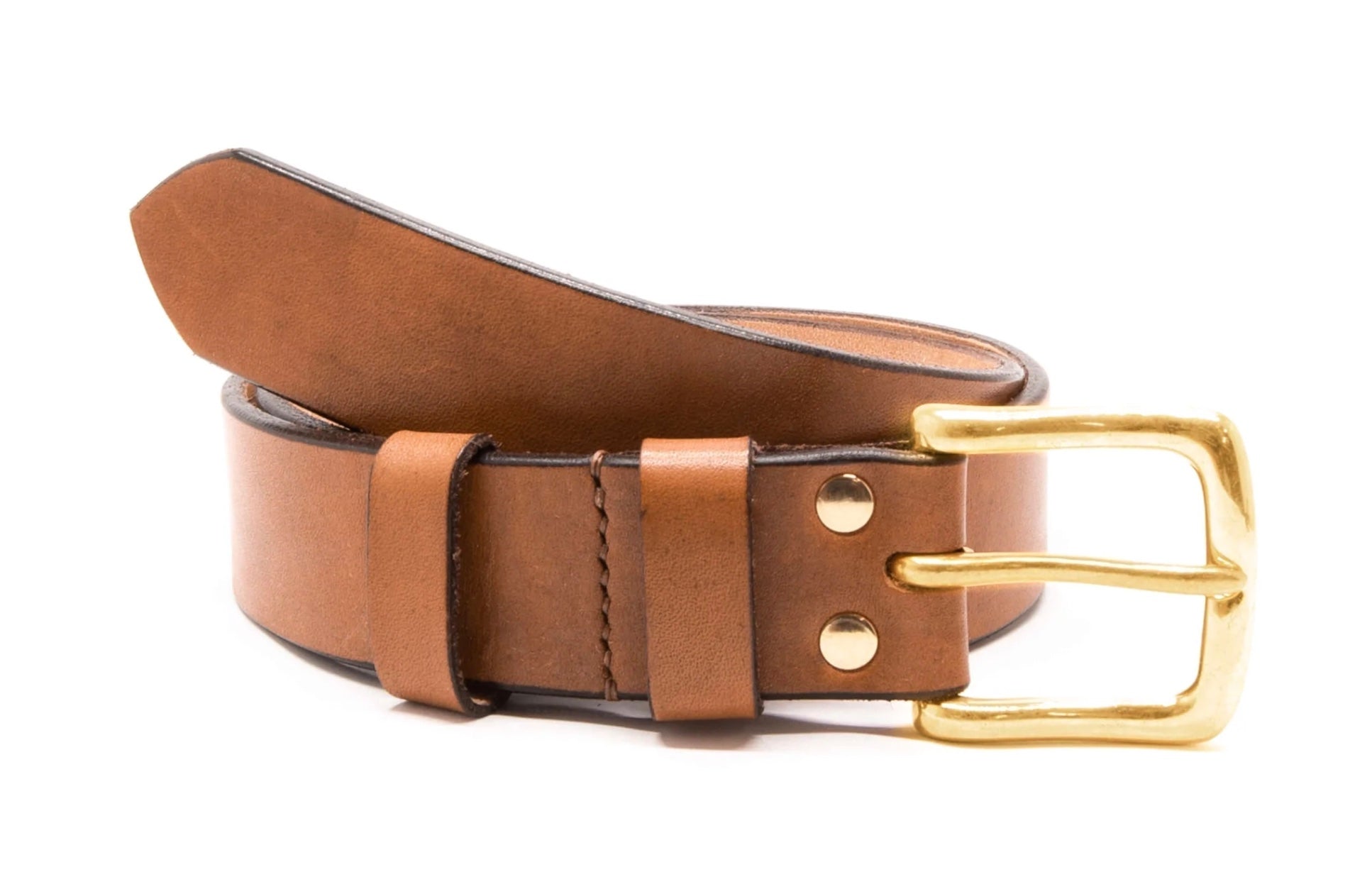
• Leather belts – Hand-stitching ensures a strong, durable seam that withstands daily use.
• Bags and wallets – Adds a premium, artisanal touch.
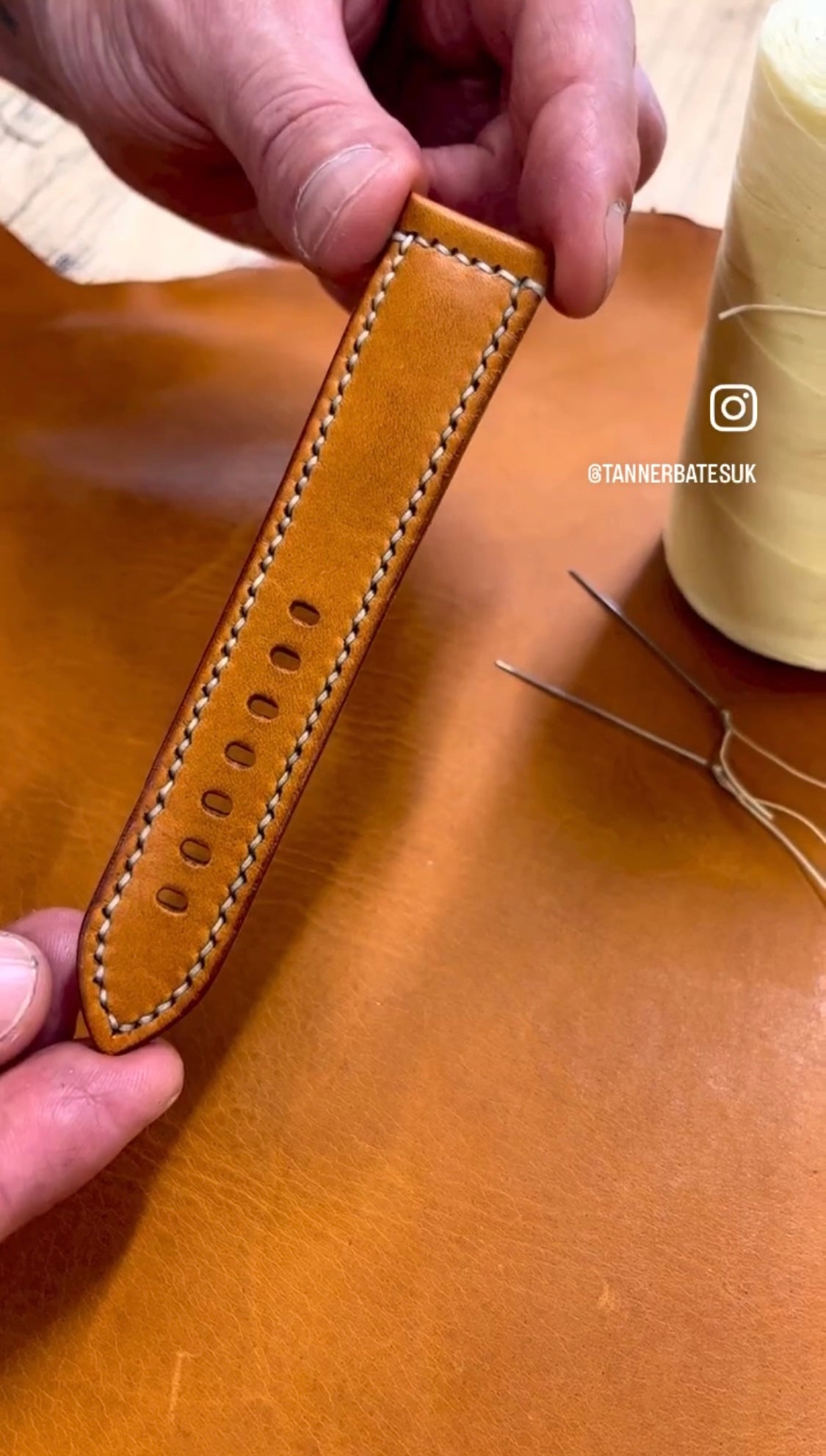
• Watch straps – Provides the flexibility and strength needed for everyday wear.
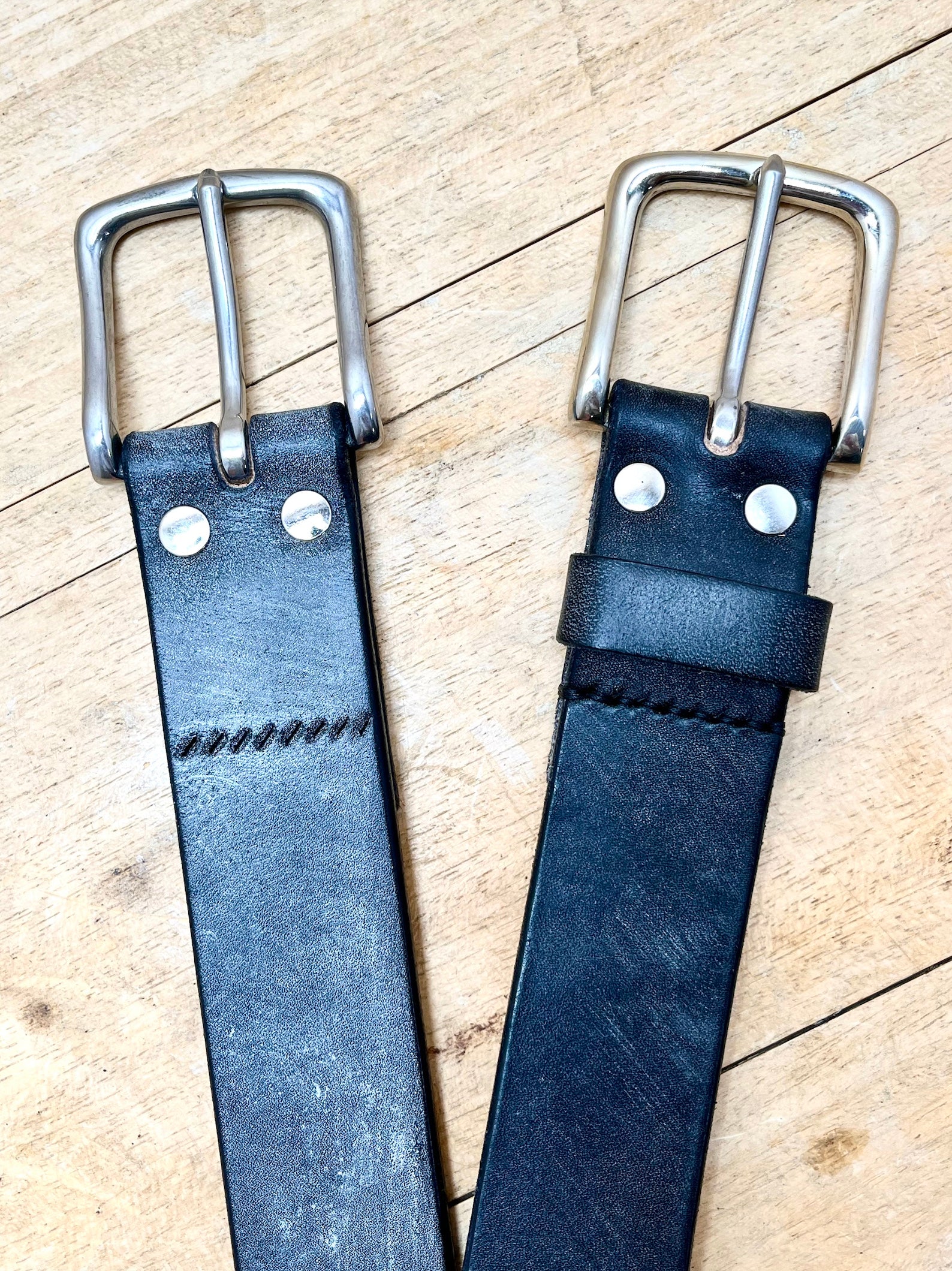
• Black leather accessories – Enhances the sophisticated look with precise stitching details.
Hand-stitching is a great way to elevate a collection of leather goods by adding craftsmanship and durability.
How do I maintain my hand-stitched leather products?
Proper care is essential for keeping your leather products in top condition. Here’s how to maintain them:
1. Regular cleaning – Use a damp cloth and mild soap to remove dirt without damaging the leather.
2. Conditioning – Apply a high-quality leather conditioner to keep the leather soft and prevent cracks.
3. Avoid excess moisture – Store your items in a dry place to prevent mold and warping.
Well-maintained handmade leather products not only last longer but also develop a rich patina over time.
Is it worth investing in hand-stitched leather goods?
Absolutely. While hand-sewing leather takes more time and effort, the results are worth it. Hand-stitched leather products offer:
• Unmatched durability – Thanks to the saddle stitching technique and superior materials.
• Aesthetic appeal – Unique, artisanal craftsmanship that sets them apart from mass-produced goods.
• Longevity – A well-stitched black leather wallet or belt can last a lifetime with proper care.
If you appreciate fine craftsmanship, investing in handmade leather products is always a smart choice.


